


The Septic Tank Party: Why Your Septic Tank Still Needs Pumping

If you're a homeowner in Northwest Ohio with a septic system, there's a party happening underground right now—and you're not invited.
Don't worry. This isn't the kind of party that keeps the neighbors awake. It's a microscopic gathering of billions of anaerobic bacteria working around the clock inside your septic tank. These tiny organisms are responsible for breaking down waste and helping your septic system function properly.
At She Knows Septic, we often hear homeowners ask, "If bacteria are breaking everything down, why do I still need septic pumping?"
It's a great question. The answer lies in understanding what these bacteria can—and can't—do.

Meet the Hardest Workers in Your Septic Tank
The stars of your septic system are anaerobic bacteria. The word "anaerobic" simply means these bacteria thrive in environments without oxygen. Since septic tanks are sealed underground and contain very little oxygen, they create the perfect habitat for these microorganisms.
Once wastewater leaves your home and enters the septic tank, the bacteria get to work.
They consume and break down organic waste from toilets, sinks, showers, dishwashers, and laundry machines. Their job is to reduce solid waste and initiate treatment before wastewater enters the drain field.
Think of them as the cleanup crew at a never-ending party. New guests keep arriving, and the cleanup team is constantly trying to keep the space organized.
Without these bacteria, septic tanks would fill with solids much more quickly, and systems would fail far sooner. They're essential to the health of your septic system.
What's Actually Happening Inside
Your Septic Tank?
Most homeowners never see the inside of their septic tank, but understanding what happens below ground can help explain why septic tank maintenance is so important.
Inside the tank, waste naturally separates into three layers:
The Scum Layer
At the top of the tank is the scum layer. This consists of fats, oils, grease, and lightweight materials that float on the surface.
The Effluent Layer

In the middle is the liquid layer, often called effluent. This is the partially treated wastewater that eventually flows to your drain field for further treatment.
The Sludge Layer
At the bottom is the sludge layer. This contains heavier solids that settle out of the wastewater.
The bacteria work primarily on the organic material in these layers, breaking down what they can. However, this is where many homeowners misunderstand the process.
The bacteria help reduce solids, but they do not make everything disappear.
The Biggest Septic Myth:
"Bacteria Eats Everything"
If you've ever heard someone say, "You don't need septic pumping because the bacteria take care of everything," it's time to bust that myth.
Anaerobic bacteria are impressive, but they're not magic.

Certain materials break down very slowly, while others don't break down at all. Items that commonly accumulate in septic tanks include:
Excess grease and cooking oils
Coffee grounds
Non-biodegradable materials
"Flushable" wipes
Feminine hygiene products
Dental floss
Paper products that don't easily decompose
Inorganic particles carried into the system
Even when bacteria successfully break down organic waste, some residual solids remain behind. Over time, these materials accumulate in the sludge and scum layers.
Imagine hosting a party where guests clean up after themselves. The house may stay cleaner than it otherwise would, but eventually the trash can still fill up.
The same thing happens inside your septic tank.
What Happens When the Party Gets Too Crowded?
As sludge and scum continue to build, they begin taking up valuable space inside the tank.
A properly functioning septic tank relies on having enough volume to allow wastewater to separate and settle. When solids accumulate excessively, several problems can occur.
First, wastewater spends less time inside the tank. This means the separation process becomes less effective.
Second, solids can begin escaping into the drain field. This is where septic problems become expensive.
Your drain field is designed to handle liquid effluent—not large amounts of sludge or floating debris. Once solids enter the drain field, they can clog soil pores and damage the system's ability to absorb wastewater.
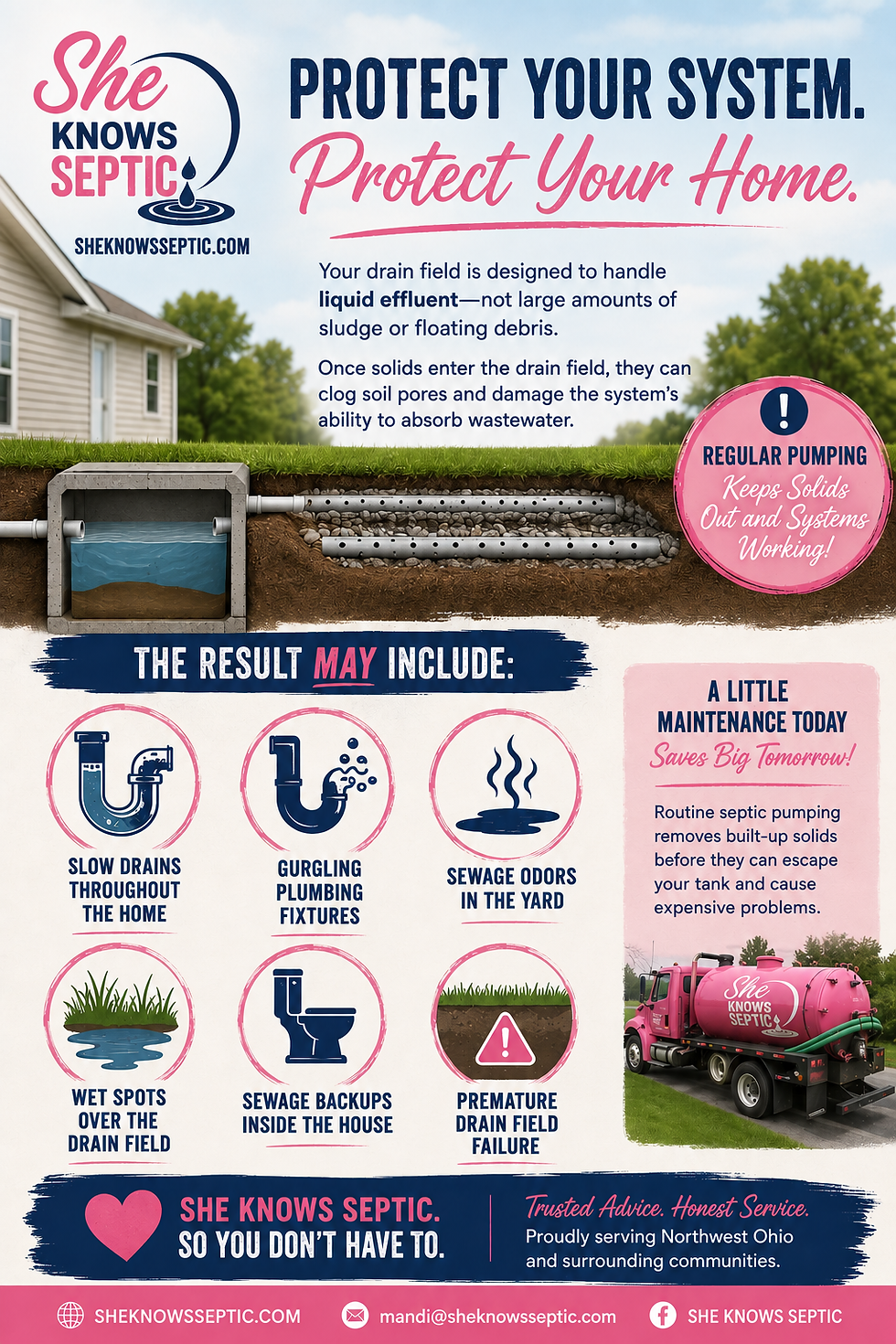
The result may include:
Slow drains throughout the home
Gurgling plumbing fixtures
Sewage odors in the yard
Wet spots over the drain field
Sewage backups inside the house
Premature drain field failure
In Northwest Ohio, replacing a failed drain field can cost thousands of dollars. Routine septic pumping is significantly less expensive than repairing or replacing a damaged system.
Why Septic Pumping Is Essential
Septic pumping removes the accumulated sludge and scum that bacteria cannot eliminate.
Contrary to another common misconception, pumping your septic tank does not permanently remove all beneficial bacteria. Once wastewater begins flowing back into the tank, bacterial populations naturally rebuild and continue their work.
Professional septic pumping restores the tank's capacity and allows the treatment process to function as intended.
Think of it as resetting the party space. You're not getting rid of the guests—you're simply hauling away the trash that has accumulated over time.
Regular septic tank pumping helps:
Protect your drain field
Improve system efficiency
Prevent backups and odors
Extend the life of your septic system
Reduce the risk of costly repairs
How Often Should a Septic Tank Be Pumped?
One of the most common questions we receive at She Knows Septic is, "How often should I pump my septic tank?"
The answer depends on several factors, including:

The size of your septic tank
The number of people in your household
Water usage habits
Whether you use a garbage disposal
The age and condition of the system
As a general rule, most residential septic systems should be inspected regularly and pumped approximately every three to five years.
However, every household is different. A family of six may need more frequent pumping than a retired couple living in the same-sized home.
That's why professional inspections are so important. They allow septic professionals to measure sludge and scum levels and recommend the right pumping schedule for your specific system.
Keep Your Septic Party Healthy
The anaerobic bacteria in your septic tank are among the hardest workers on your property. They help break down waste, reduce solids, and keep your septic system operating efficiently.
But even the best cleanup crew can't handle an endless stream of waste without a little help.
Over time, sludge and scum accumulate, and septic pumping becomes necessary to maintain a healthy environment inside the tank and protect the drain field.
At She Knows Septic, we're passionate about helping Northwest Ohio homeowners understand their septic systems and avoid costly repairs. Regular septic tank maintenance and timely septic pumping are some of the simplest ways to extend the life of your system and protect your investment.
After all, every good party needs an occasional cleanup—and your septic tank is no exception.


I really enjoyed reading this article. The author explains the topic in a clear and practical way that makes it easy for readers to understand. Homeowners researching septic tank pumping cost can also benefit from learning about regular maintenance before unexpected issues arise.